
How Robotic Process Automation Is Transforming Accounting

Research shows that optimizing financial processes through automation can cut time spent on tasks by 30-40%, while teams complete financial processes 85x faster with automation. More dramatically, financial automation reduces reporting errors by 90% compared to manual methods. According to finance automation research, 98% of CFOs report that their finance teams have invested in some form of digitization or automation initiatives. More critically, 95% of accountants have adopted automation to streamline processes including payroll and accounts payable.
- Robotic Process Automation (RPA) is a cutting-edge technology designed to automate repetitive tasks, thus allowing businesses to achieve more with fewer resources.
- When a single robot is able to perform work round-the-clock that would have taken employees hundreds of hours, it improves scalability, too.
- When reperforming a transaction, your auditors ascertain whether the result they came up with ties with what’s in your general ledger.
- Plus, it also presents the data in a proper readable format, effortlessly solving the chaos of fragmented and inconsistent data formats.
- RPA uses software “bots” to automate repetitive tasks that humans typically do in digital systems.
- This includes sending reminders for overdue payments, tracking outstanding invoices, and automating payment approvals, ensuring a smoother cash flow management process.
Read Inbox, vendor portal and capture invoice data
The software automatically identifies discrepancies in data and by identifying entries from invoices, forms, and bank statements using AI automates data extraction and entry process. RPA robotic accounting has the potential to transform many areas of business, in particular, accounting functions. Organizations should first consider RPA for processes that are rules-based and easily defined. Organizations wanting to start automated processing typically start with RPA before moving on to more sophisticated methods, such as artificial intelligence or machine learning. Watching over bot performance is imperative in high-stakes financial settings.
RPA’s Role in Modern Accounting
Moreover, for RPA to thrive in audit engagements, firms should leverage the support of their IT departments. Robotic process automation (RPA) is rapidly changing the accounting and finance operations, arguably faster than any other piece of modern technology. When bots gather and process financial information, companies can access clean, structured, and real-time data faster. Improved forecasting, quicker course correction, and data-driven decision-making at all levels. Finance and accounting have invariably been at the heart of every enterprise, usually demanding attention to detail, consistency, and efficiency. But as companies grow and transactions increase, manual steps become the bottleneck, causing errors, delays, and operational inefficiencies.
Benefits of RPA in Accounting
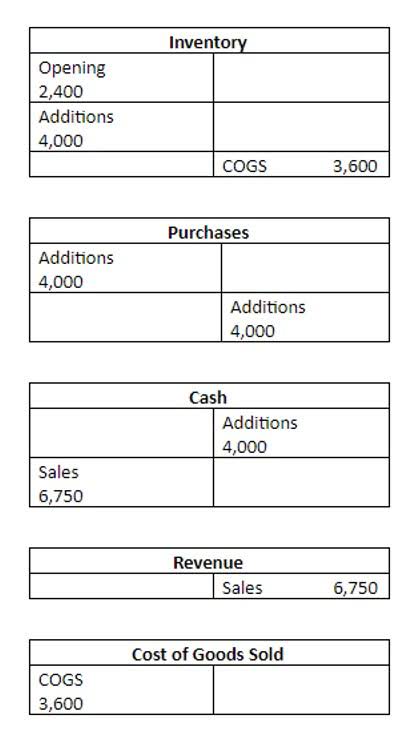
- Inventory accounting is all about capturing stock levels in financial records, from profit & loss reports to balance sheets.
- The AI algorithm continuously learns through a feedback loop which, in turn, reduces false anomalies.
- With 95% of accountants adopting automation and the market growing to $9 billion by 2026, competitive pressure intensifies for organizations still relying primarily on manual processes.
- RPA in accounting often works hand-in-hand with other technologies to streamline financial processes.
- It provides employees with the opportunity to learn and develop their skills, while driving business growth and enhancing customer engagement.
Start by clearly communicating the benefits of RPA, emphasizing how it will free up their time from tedious tasks and allow them to focus on more fulfilling work. Remember, successful RPA adoption relies on your team feeling comfortable and confident using the technology. While some technical knowledge can be helpful, many platforms offer intuitive interfaces and drag-and-drop functionality, making it easier for non-technical users to create and manage automations. Plus, focusing on training and change management during implementation can help your team adapt quickly. It’s crucial to communicate with your team throughout the entire RPA implementation process.
Analyst Reports
Evaluating the leading companies within this market is crucial for stakeholders to understand the ecosystem, identify potential collaborators or competitors, and make informed strategic decisions. This market encompasses a range of companies engaged in the development and production of robotic systems and components, each playing a significant role in shaping the industry’s future. You alsowant to use the technology for auditing paperwork and inputting data that isalready available in your system.


One of the most significant developments is the integration of artificial intelligence (AI) with RPA, allowing for the automation of more complex tasks and enhancing https://www.bookstime.com/ decision-making processes. AI-powered predictive analytics can process large datasets quickly, providing valuable insights that help organizations make more informed decisions about future revenue and expenses. This integration improves the accuracy of financial forecasting and enables more insightful business strategies through robotic accounting tools.
When it comes to business trips, RPA bots can facilitate lots of manual work for both travelers and accountants, creating a better employee experience. Operational lags in accounts payable usually occur while processing invoices. Vendor invoices are non-standardized and need to be cross-checked with purchasing orders and approved.
- This feature helps accountants and their customers make better decisions, manage risks, and uncover possibilities for development and optimization.
- Before deploying RPA at scale, test the system on a smaller set of tasks.
- Accounting firms are using RPA (alongside technologies such as machine learning and artificial intelligence) in most areas of the business, including their advisory, taxation, and assurance services.
- Accountants can shift their focus from tedious data entry to higher-value activities like strategic planning and analysis.
- Automation accelerates month-end close cycles by eliminating manual data collection, consolidation, and reconciliation bottlenecks.
- The solution substantially reduced the manual effort involved in calculating monthly, quarterly, and yearly amortizations, and proved a big advantage when auditing financial statements.
A Deloitte survey found robotic process automation (RPA) in accounting improved customer compliance 92 percent, accuracy 90 percent, productivity 85 percent, and reduced costs 59 percent. If ever there was talk of a transformative technology for accounting firms, robotic process automation would rank near the top. Expect deeper robotic accounting software integration with AI — bots won’t just follow rules but will analyze data anomalies and flag risks in real time. The first step in implementing RPA is to identify the processes that are suitable for automation. Time-sensitive and repetitive tasks are prime candidates for RPA, as they benefit the most from automation. Once these tasks are identified, documenting the processes, including steps involved, relevant parties, and potential improvements to reduce waste, is crucial.
With its accounting and procurement divisions, finance satisfies both of these criteria. It is well-known as a business function for repetitive, time-consuming tasks such as data entry, reporting, cross-checking, and record-keeping, which is ideal for RPA bots. When implementing RPA in financial processes, use robust data encryption protocols to safeguard sensitive financial data, whether it’s at rest or in transit. Strict access controls and authentication mechanisms limit entry to authorized personnel only, reducing the risk of data breaches.
Financial
Companies can pursue growth opportunities without immediately expanding accounting headcount, improving profitability while maintaining service quality. The automation infrastructure scales gracefully to handle volume increases https://assemamed.ly/2023/07/04/gross-profit-margin-definition-formula-examples/ during seasonal peaks, geographic expansion, or merger integration periods. In the meantime, explore how other leading companies modernize their finance operations with Tipalti.